Comparable
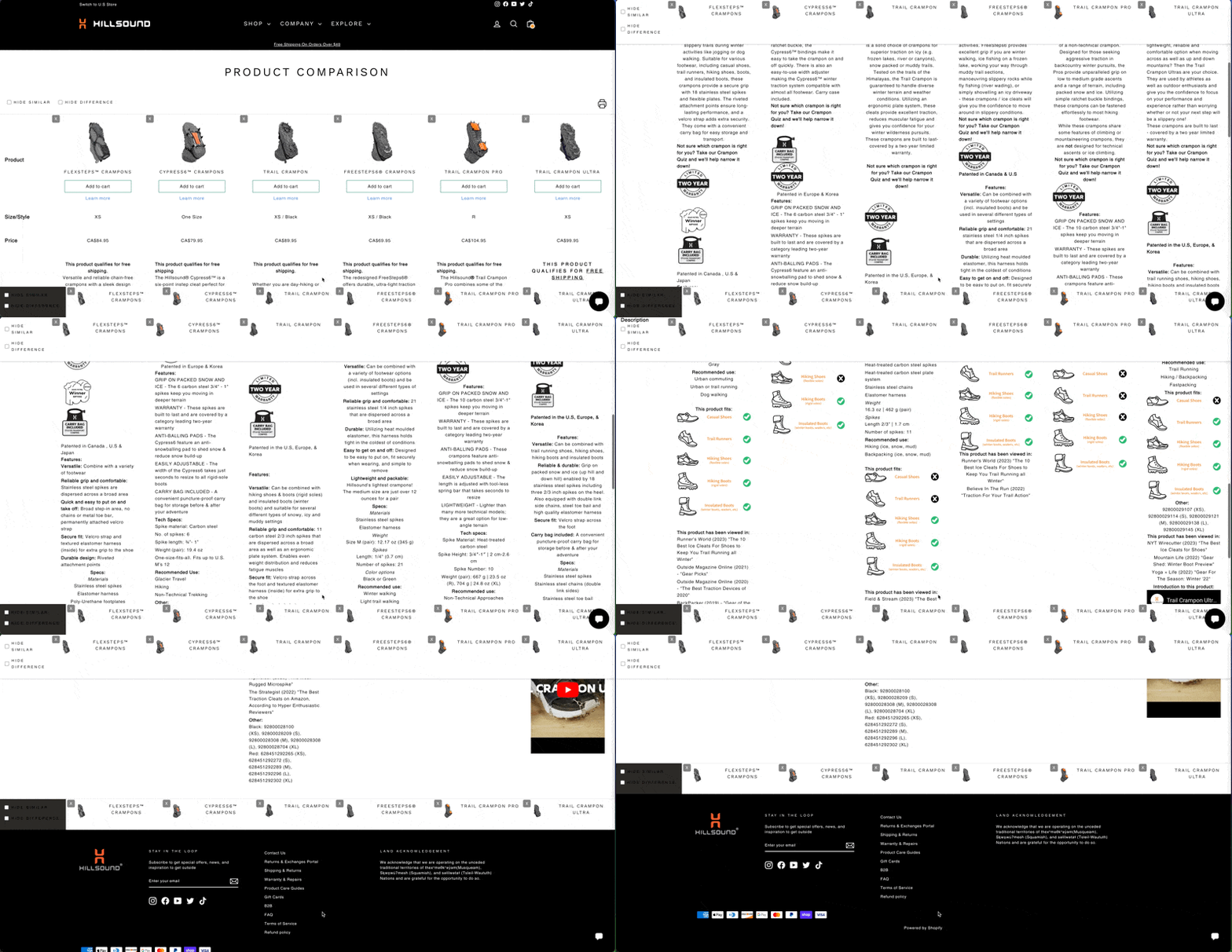
Redesigned comparison experience that dropped 25% in relevant inquiries.




Worked on project as
Lead
designer
Went rapid on this project for
8
weeks
Dropped costs and inquiries by
25
percent
Context
Hillsound is an outdoor gear brand with technical products such as crampons.
As the product line grew, so did customer confusion.
Customers frequently contacted support to ask:
“Which product is right for my use?”
While phone calls were manageable, online inquiries created a direct cost to the business, prompting the team to look for a scalable solution.
Problem
Customers were unable to confidently choose products on their own.
High volume of support inquiries
Confusion around product differences
Existing comparison tool was underutilized
👉 Basically, people weren't able to decide on what product they needed.
What I Found
Customers asked for more specifics.
Through analyzing customer inquiries, I noticed a consistent pattern:
👉 Customers nearly always described their activity + terrain when asking for recommendations.
(85% of which were asking for recommended use)
Choosing the best gaiter for
walking in the bush in snow. - Melissa
The existing tool didn't work.
Despite having a comparison feature, it failed in practice.
1: Missing rows + Misaligned data
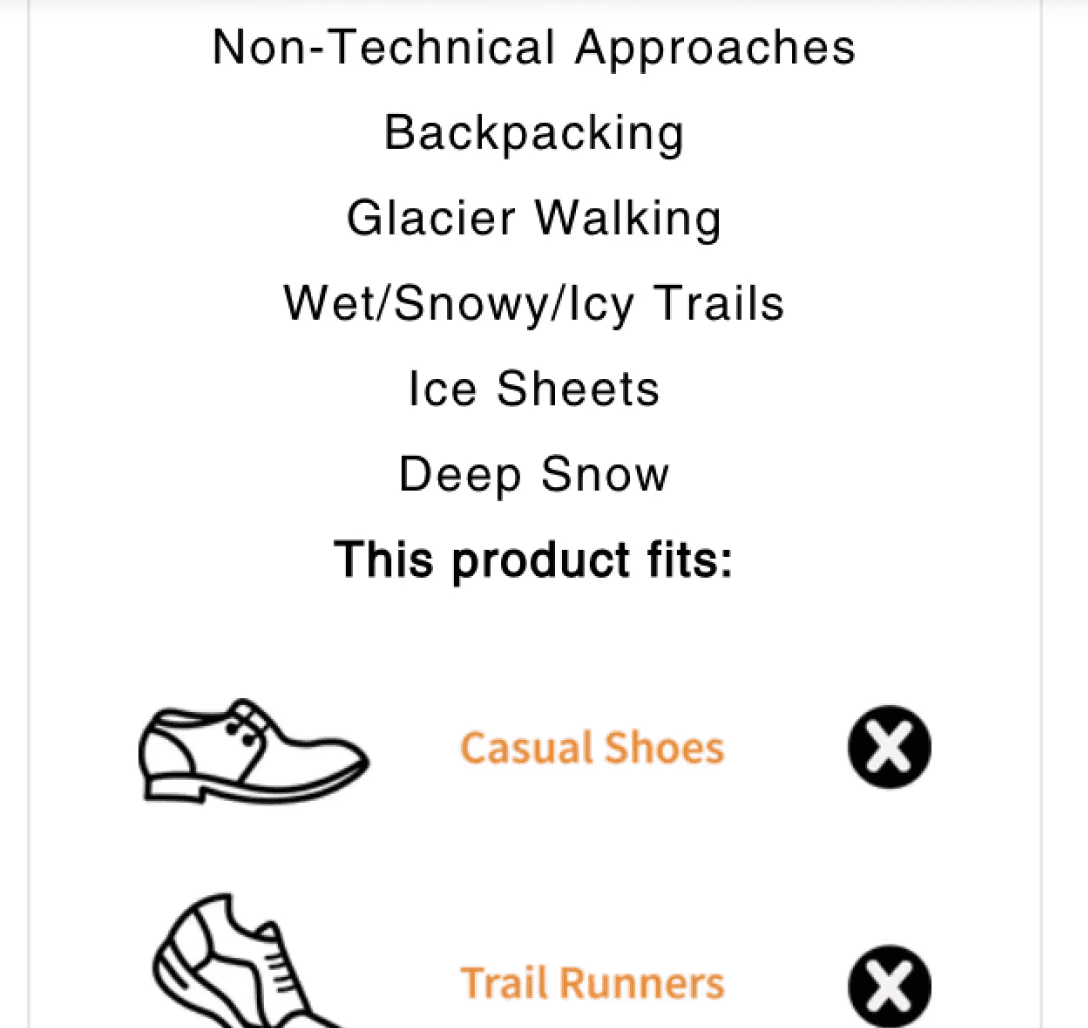
Shoe Compatibility Comparison
👉 One shows 2 types of shoes while the other shows 5.
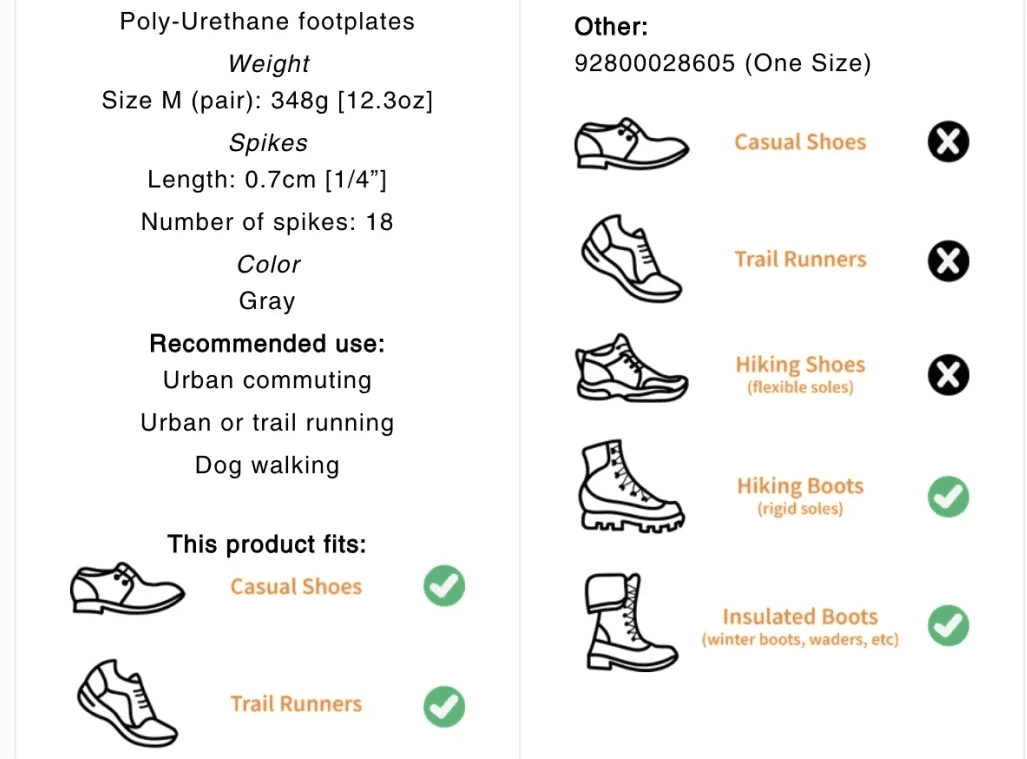
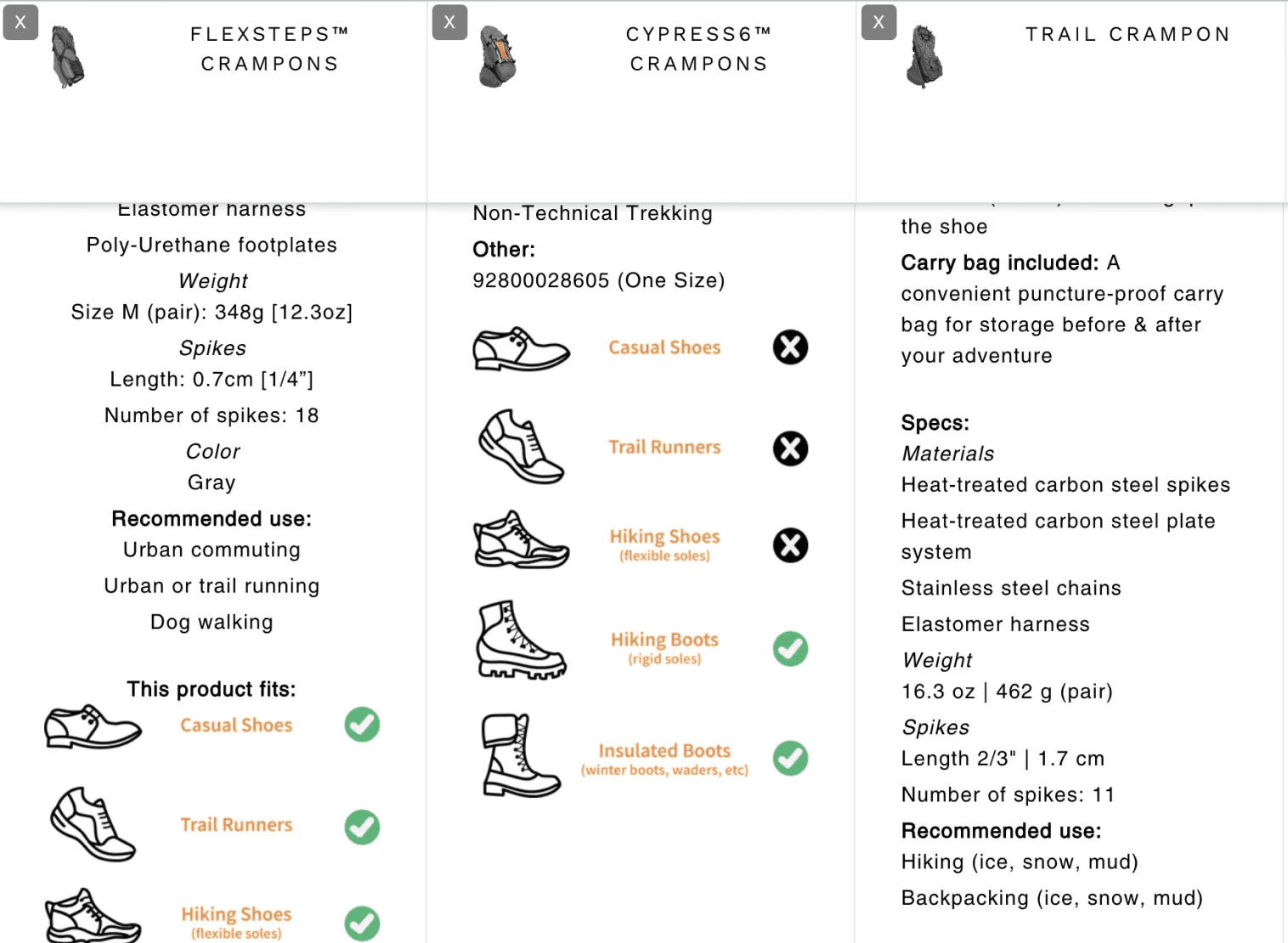
The 'Shoe Compatibility' content for all products aren't aligned due to missing rows.
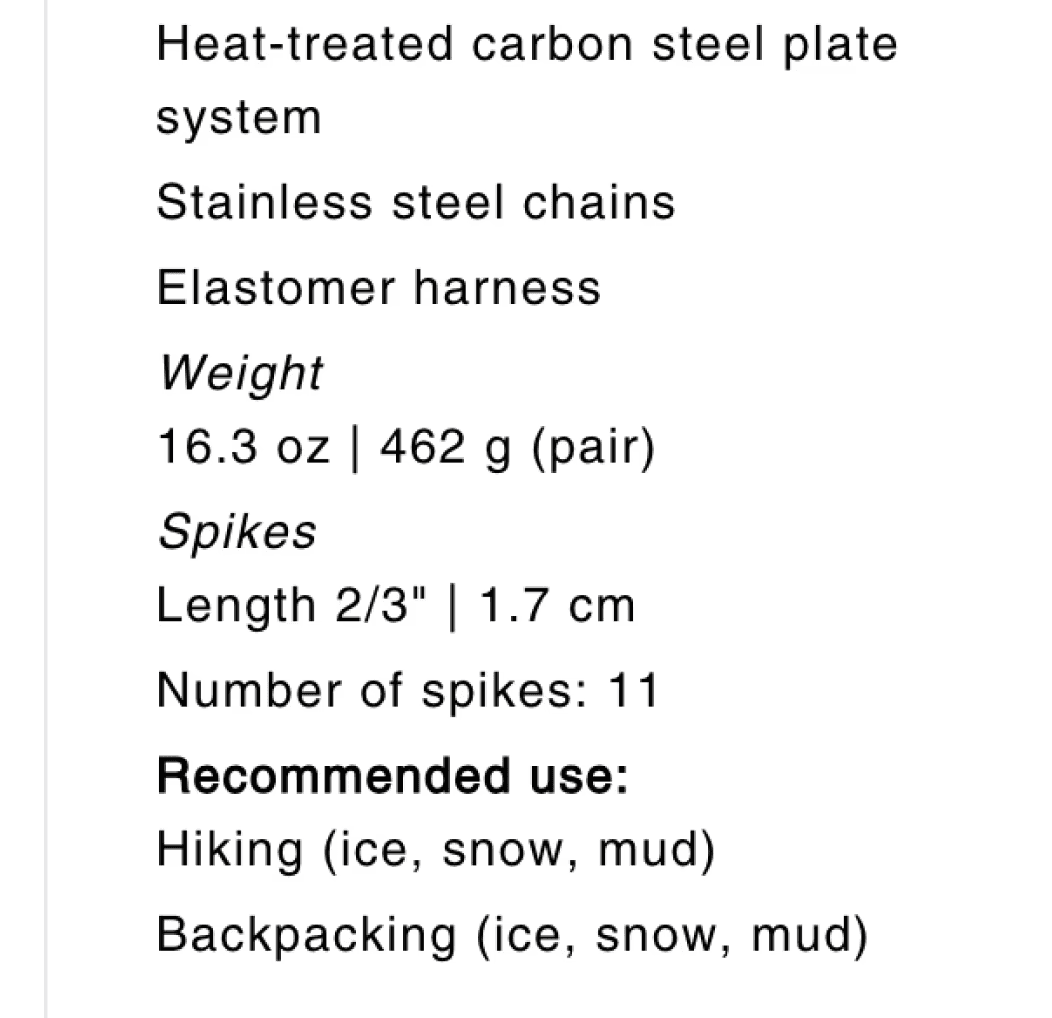
2: Inconsistent terminology
“Backpacking (ice, mud, snow)” vs "Backpacking"
👉 Customers were asking, "Can this be used for ice, mud and snow too?"
Information wasn't structured for comparison
The website had some key dependency: Shopify and therefore,
Data was managed through separate pages
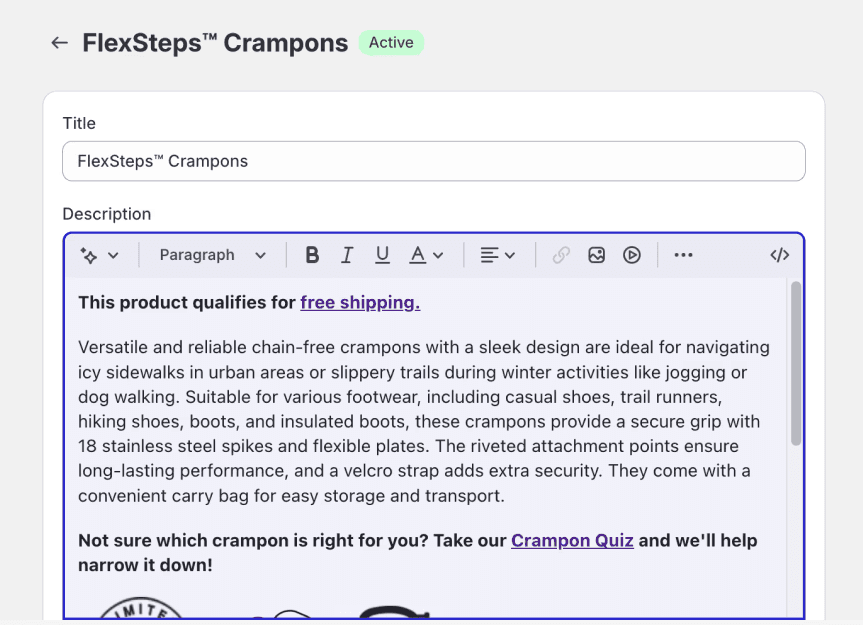
All product specs were written under 1 single input field, "Description"
👉 Shopify couldn’t generate consistent comparison rows
1 input field for all specs
Key Insight
The problem wasn’t the lack of a feature but the lack of structured information.
Needs to Goals
reflect how users think (activity + terrain)
support real-world decision making
present consistent, comparable data
improve clarity of product differences
reduce cognitive effort
structure info for easy comparison
Constraints
Being built on Shopify, predefined data structure was required
Limited UI flexibility due to third-party apps
👉 This required solving both frontend AND backend structure
Solution
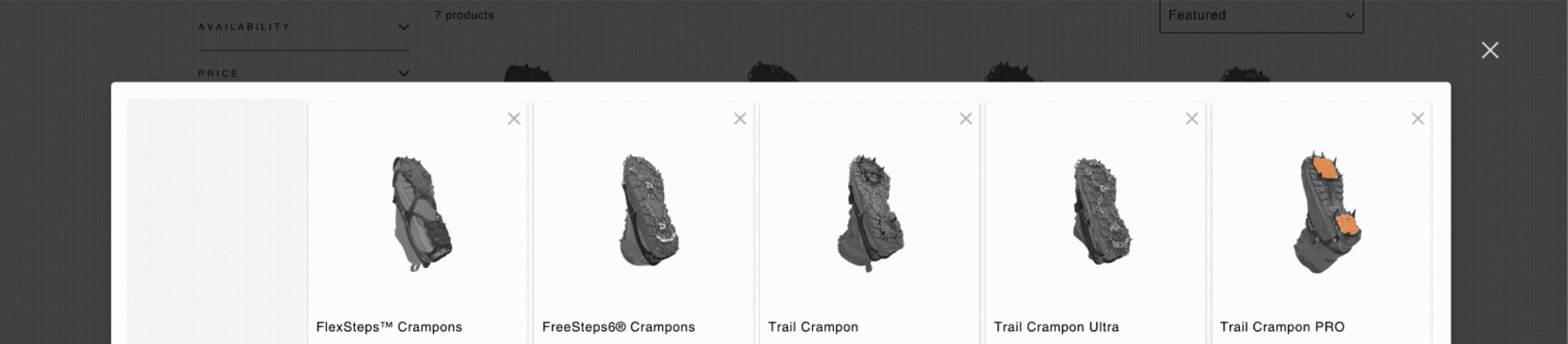
Rebuilt the Interface
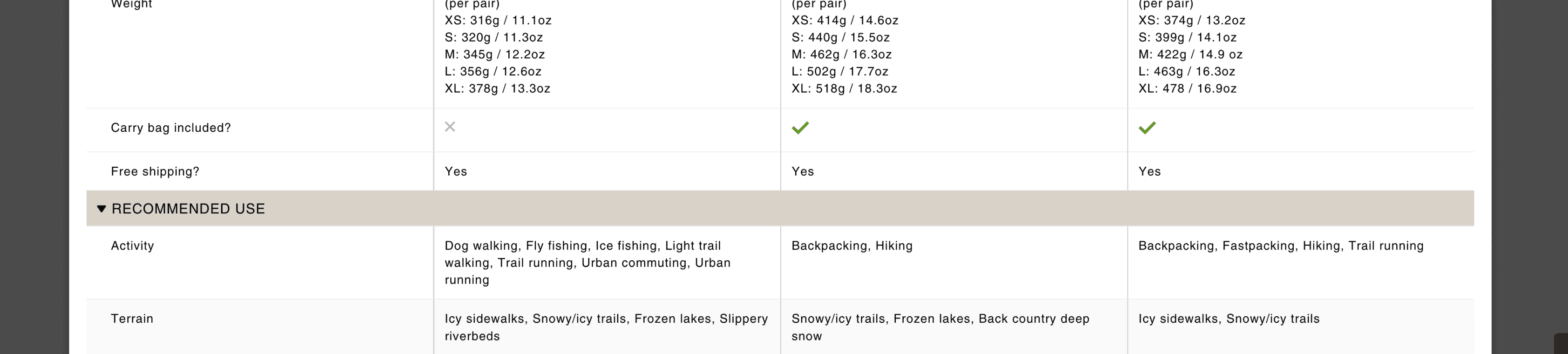
Introduced consistent rows across all products
Ensured side-by-side alignment
Clear hierarchy in information
👉 Users could now compare products at a glance with clear rows.



Collect and Documented the "Right" Information
Working with the industrial designer, I:
Defined key attributes (activity, terrain, conditions)
Grouped and categorized specifications
Ensured consistent terminology across all products
👉 Filled in missing info + ensured consistent specs
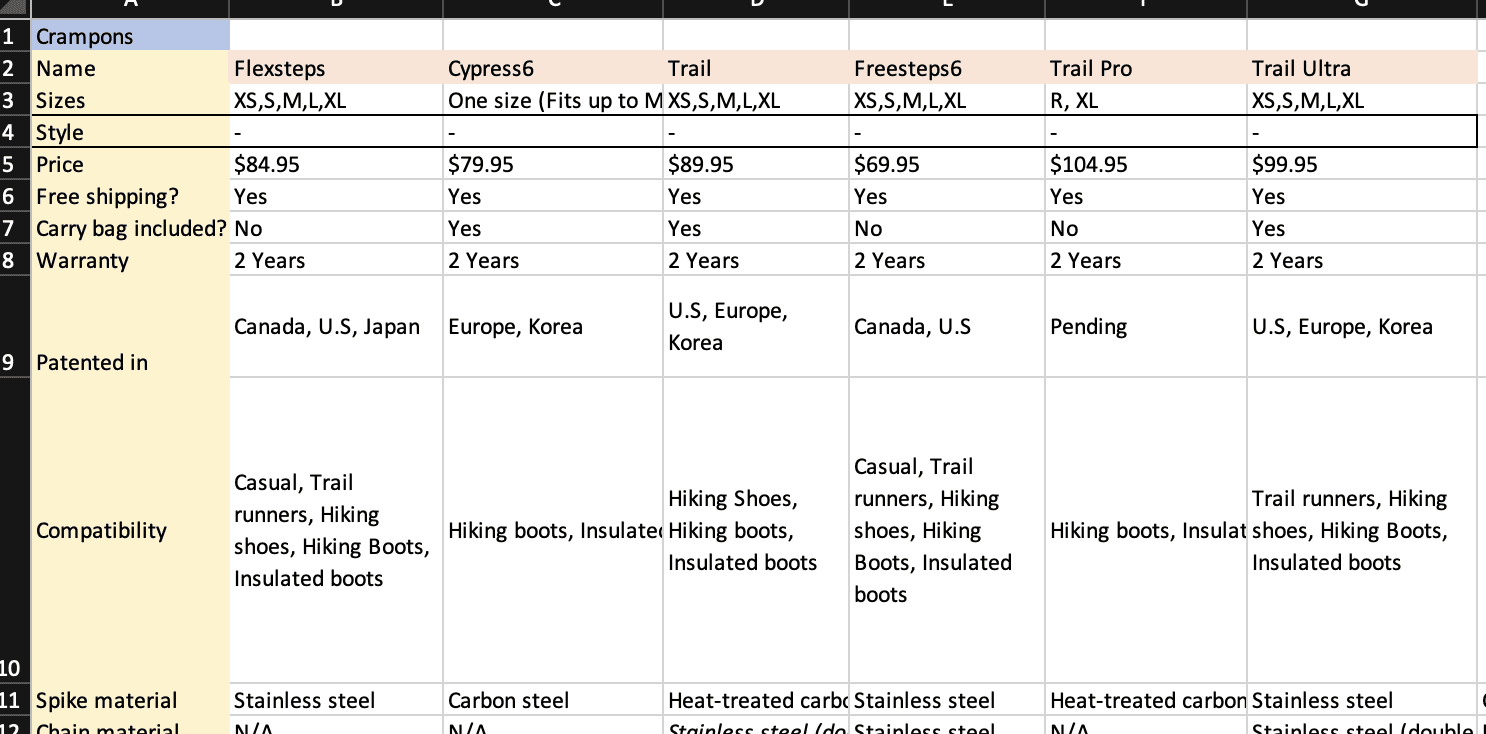
Restructuring Data on Platform
To enable the new experience, I:
Learned Shopify's product data system (metafields)
Organized specs into structured categories
Enabled dynamic rendering of comparison tables
👉 Learned the platform and constraints to arrange info reflecting Hillsound's needs.
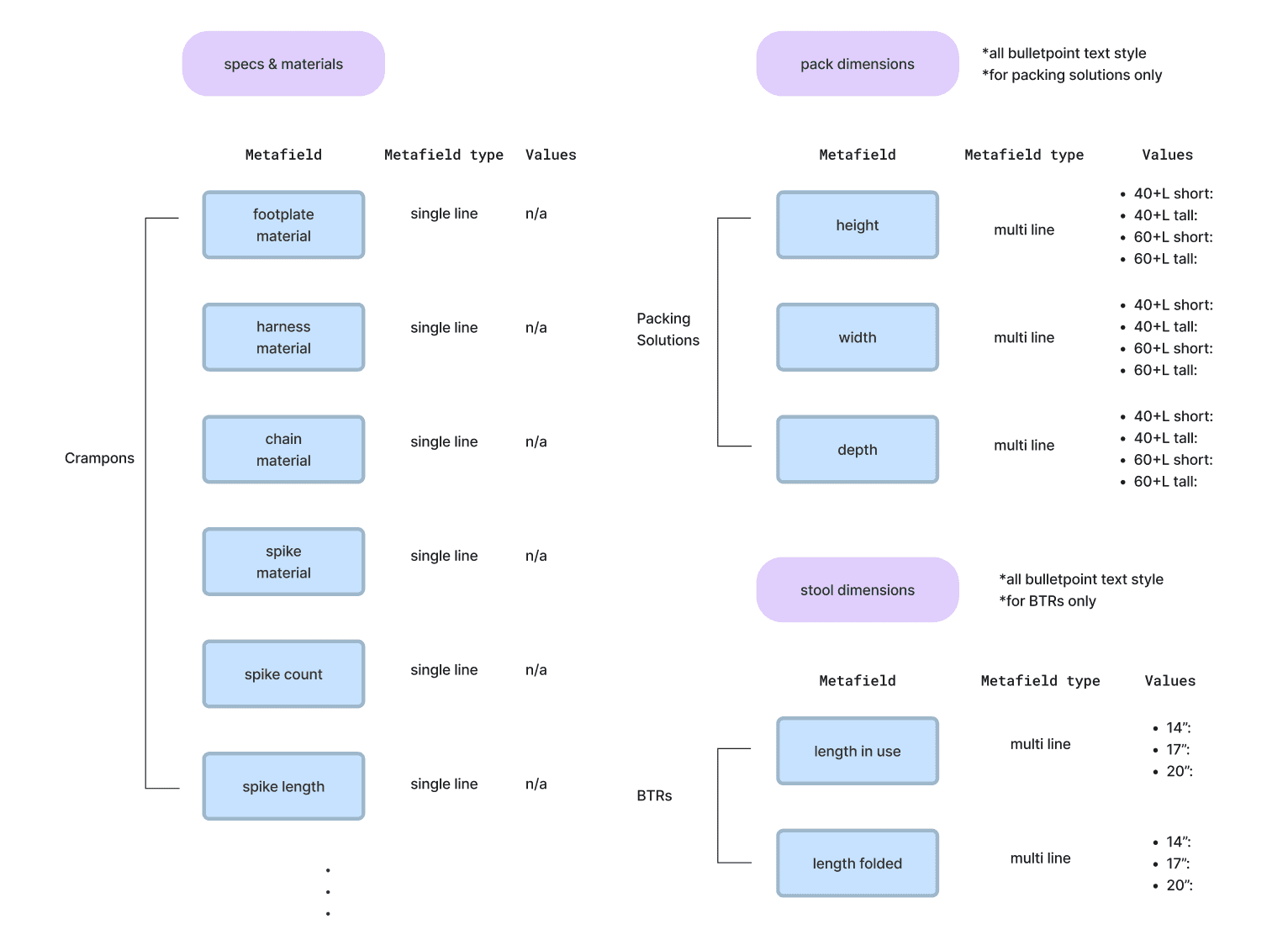
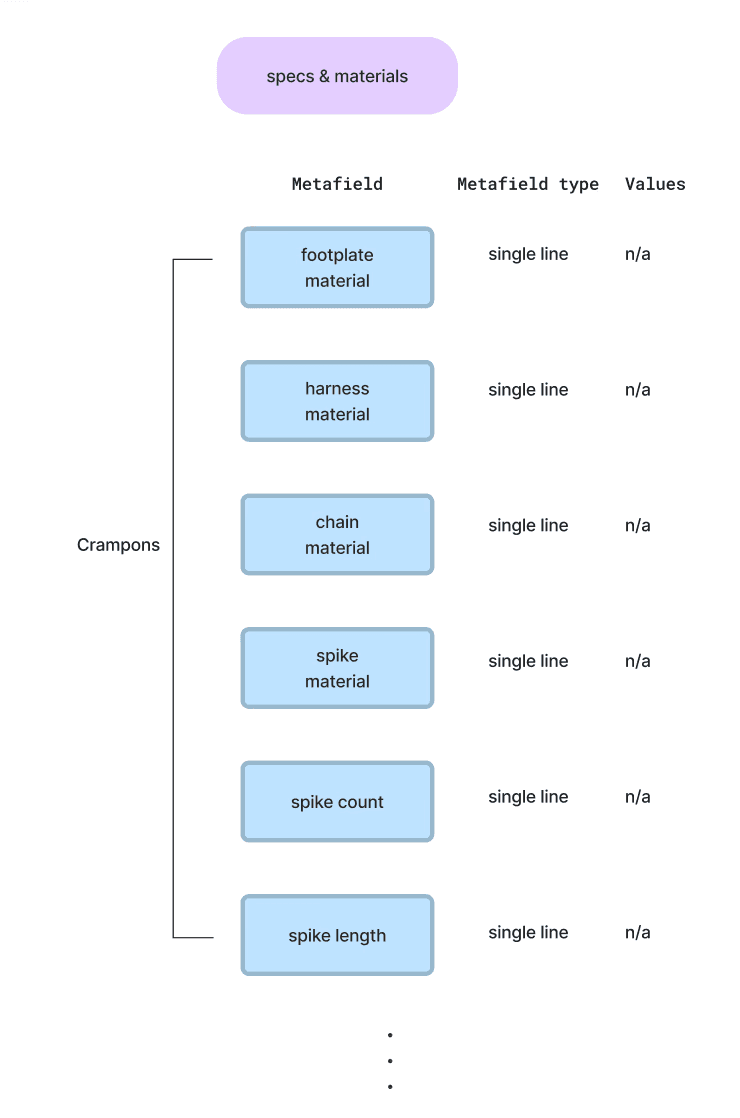
Displayed Info that Customers Really Wanted
Going back to our findings during CX analysis,
"Choosing the best gaiter for walking in the bush in snow." - Melissa
Gaiters and crampons are technical products where people have a specific use case they want to use the product in.
👉 Introduced subcategories: Activity, Terrain
...
...
3
4
Impact
Within 30 days of launch:
25% reduction in relevant customer inquiries
Lower operational costs for customer support
Improved user ability to make independent decisions
(Exact cost savings are confidential)
Reflection
This project reinforced that:
UX problems are often system and data problems in disguise
Clear information structure is critical for decision-making
Designing for real user intent leads to measurable business impact